Perhaps the greatest verbal and narrative genius currently in operation is the PR team guiding Tiger’s damage control. The wording of his statements has been pure poetry. And the overall strategy is unerring. His statement today about taking “indefinite leave” from golf is the latest tour de force of PR thinking. His team realized the damage was so severe, they could never spin out of it. They had to create an entirely new narrative: The Resurrection and Return. So first, Tiger had to go away, disappear, die, in a sense. Only then could he reemerge after some “indefinite” amount of time (to be determined by his PR team taking the national temperature), at which point the story would be no more about Tiger the Hound, the Big Disappointment, but the New, Chastened, Rededicated and Refocused Tiger. The Comeback Kid.
Author & Editor
Blog
Makes Strong Men Weep
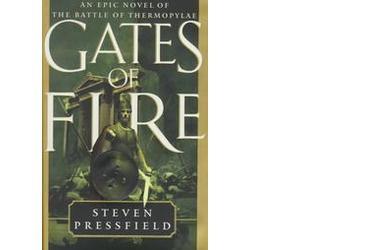 I had this great encounter with Pete, the uber-personal trainer at the Y. He’s a guy you might take for a stereotypical jock. He’s normally all about new ways to stress your core, but the other day he’d just read a book — a BOOK! — that had bowled him over, and he couldn’t stop talking about it. It was like someone newly (and gaggingly) in love who can’t stop going on about his beloved. And they say narrative is dead. Before we write the obit, we’ve got to account for Pete.
We did a small personality piece on Pete in The Washington Post Magazine, and in talking with him about that, it became apparent he didn’t read the magazine, or even the newspaper much. So his passion for the book, Gates of Fire by Steven Pressfield about the battle of Thermopylae, doubly surprised me.
“When I started getting near the end, I began to slow down because I didn’t want it to stop. And then when I read the last page, I almost began to cry,” he said.
Yes, the book, which is really about the culture of the Spartan warrior, does feature some rather extreme training methods (and by extreme I mean frequently fatal). So clearly, that got Pete’s professional attention. But it’s not what made him want to cry when he ran out of pages.
Pressfield does a great job of immersing his readers in an alien world, featuring unspeakable brutality, yet full engagement in the real stuff of life (which always includes the proximity of death). And he’s a master at building a narrative, creating characters you care about and constantly putting them in situations of high suspense. He also deeply understands the technique of leaving key storylines hovering in the background while he forges ahead with another high-action sequence. The unresolved issues, usually emotional ones, make the characters much more highly charged as they face the physical and tactical challenges of battle. The tension and excitement in the foreground effortlessly takes on a third dimension because of what you know about the emotional challenges pushed out of sight, but not forgotten.
Also, there is an oddly romantic appeal, especially to guys like Pete, of a life that is immediate, physical, close to the elements, purged of the falseness of modernity. A movie might also move Pete, but movies happen to you. You don’t feel like you are a participant, up inside the screen with all the characters. The power of written narrative is it brings the reader inside the pages, allows him to live there in his imagination. The “END” on the final page was a rude eviction notice, one worth crying over.
“I’m just waiting long enough to forget some of it,” Pete said, “then I’m going to read it again.”
I’ll Have What He’s Having
An add to my post on Stuever’s ability to turn the minutiae of contemporary culture into fascinating repartee. One time Stuever and I had lunch in one of those $18-a-salad restaurants. We had some business to discuss, but I don’t remember what. What I remember is that we very quickly fell into what I always considered the real business of lunch with Hank: a far-ranging discussion of movies, books, celebrity cults, political pretensions, cubicle culture, whatever. About halfway through the entree, a woman dining at the next table leaned over and said: “I’ve never been so entertained by an overheard conversation. I need new friends.”
The Gift of Christmas Present
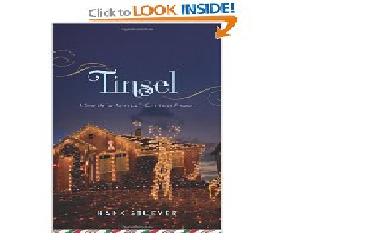 Hanging around with some families in the Texas exurbs for a few months before the holidays doesn’t seem like it would be all that riveting a subject for a book, but Hank Stuever has that unbelievably rare ability to peer deeply into the specific minutiae of contemporary culture and spin out insights that are both fascinating and hilarious.
Like when he’s talking about this city built out of the arid Texas plains, he points out that everything is either “back when there were nothing but cows” or brand spanking new. The highways, the houses, the malls.
“Sometimes even the people feel brand-new – in pretty gift wrap. Billboards on newly widened streets advertise Lasik so you can see new, cosmetic veneers so you can smile new; 1-800 numbers extol the miracle of reverse vasectomies, because new things are happening all the time. People smile at me with brilliant white teeth, and before long they are hugging me hello and goodbye, I learn how new and improved pairs of frankenboobs feel as they briefly press against my chest in understanding hugs of welcome.”
So magically, Hank takes a boring, non-descript town, and generic run-of-the-mill encounters with its inhabitants – nothing but straw – and spins it into the pure gold of social commentary. Not to mention makes it fall-down funny.
This isn’t a “trick” of writing. His words are brilliantly chosen, but it’s not vocabulary that makes the magic. It is brilliant observation and the perception of patterns. He sees in this purely artificial metropolis the underlying mania for newness. He understands that the thing that drives people to desire to live in such places is a desperation to break from the entanglements, the many mistakes and messes of the past – whether it be personal disasters or the general untidy nastiness of a world with too many flaws. The only salvation is to sterilize everything by boiling it in out-of-the-box newness.
Ok, now you know Stuever’s trick is more like clairvoyance than magic. He sees things we don’t notice, connects dots we miss entirely. He’s sitting high on a hill, watching the human comedy play out from a distance, and saying: “Wow, did you see that? Did you notice this?”
But even though he seems like he’s watching from afar, it’s actually by plunging in up close and personal with the very real people of his study that he generates his best material. Getting close enough, for example, so that he can have one of his subjects actually seek his advice about a parenting dilemma she faces. Now, watch what Stuever does when he isn’t working with straw, but 24-karat gold:
“If Emily asks me if Santa Claus is real, what do you think I should tell her?” Tammie asks me, one afternoon when we’re alone, in another house that is getting the garland-on-the-staircase, feathers-on-the-tree, full-on Tammie treatment.
I am ever a reporter, and, it’s important to underline here, not a parent. Virginia O’Hanlon was 8 when she asked her famous question, and that seems to me like a fine age to get just a bit more real. I had my own “No, Virginia” moment when I was 7, after Christmas Eve Mass with my family. As I was escorted, half-asleep, from the car to my bed, I overheard one of my big sisters — Ann, always the loudest — telling my mother that I was dead asleep and it was okay to start setting up Santa’s unwrapped gifts to me under the tree. I shed not one tear.
As a treasured piece of journalism history, the full text of “Yes, Virginia” fails upon further scrutiny, if only because its ultimate message is that there is something inherently wrong with skepticism. If a child has concluded, all on her own, that it’s impossible for a man in a flying sleigh to make it all the way around the world in one night, delivering elf-made replicas of all the stuff you see in Target and Best Buy, then that’s a child I would be happy to steer toward a voting booth when she’s 18. That’s an American in search of facts. If, however, she goes on pretending to believe well into her teens (I encountered more than one such teenager in Frisco), because it makes her parents (and God) feel sweet and happy, then I become worried. That becomes an American willing to spend $100,000 on her “special day” wedding, or who will believe without hard evidence that other countries harbor weapons of mass destruction. The angst over Santa’s existence comes not from the children, I think, so much as the grownups. The adults literally tear up when I ask them to talk about how, and when, their child will learn there is no Santa. Once you know there is no Santa, then there’s no stopping the awful truth about everything else.


