Great Herald Hunt yesterday. For once, the weather cooperated. No, it didn’t “cooperate” — it actively collaborated, and colluded. It was an unindicted co-conspirator. The kind of mid-70s low humidity day that makes people still want to live in South Florida despite the quality of driving there. And here’s a fabulous Hunt quote in the paper today that perfectly captures the Hunt spirit:
“This might be it,” said Jeff’s brother, Rob, speaking of yellow dots on the pavement leading to the Venetian Causeway. “Absolutely not,” Jeff said. “I think that just might be for people working with the sewers . . . But we can’t rule anything out.”
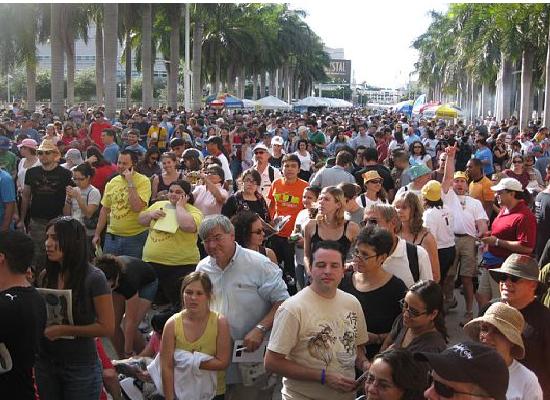
The full story, as usual, struggled to explain the Hunt, but it also included the puzzle-by-puzzle explanation.
After the last Herald Hunt, which took people an hour and a series of hints to solve, we intentionally made this one easier, and we succeeded. Huge percentages of the 5,000 participants seemed to have genuinely solved most of the puzzles, and the winner solved the endgame — the Final Solution (which requires solving all the preliminary puzzles first) two minutes after we issued the final clue.
Most people seemed to enjoy being able to get so deep into the Hunt and still be competitive, but a few complained it didn’t require “enough brain power” as one woman down from DC for the Hunt put it. I said, “So you won, then?” And she said, “Um, no.”
“Well,: I said. “Maybe if we had made it easier still, you might have.”
 Anyone who’s ever taken a writing course knows about the sacred totem of Significant Detail. Significant details are the small (or large) observations that say volumes about the subject of your piece. In the most powerful pieces, the significant details are SO significant, so perfect, they seem made up. You just can’t believe the writer got that lucky. And the best writers (who are also the best reporters) get lucky over and over again in spectacular, though non-sexual ways (sorry writer dudes, but being a great writer is no guarantee of female companionship, and I have abundant proof of that, though I refuse to name names).
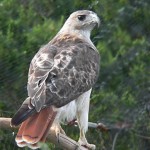 Here’s the thing about cliches popping up in your writing: You’ve got to watch them like a hawk. But seriously folks, nobody’s immune. The first time anyone ever used that phrase to describe the need for intense attention, it was brilliant. Hawks can see a rodent in tall grass from 100 meters away. They not only have phenomenal eyesight, but they depend on it, and their attention to the smallest detail, for their survival. If a hawk isn’t paying attention, a hawk goes hungry. But after about the billionith use, “watch like a hawk” just became lazy. No listener or reader would be instantly calling up the image of a survival-driven creature with superior eyesight peering into the brush because its life depended on it. “Like a hawk” just became a compound word that meant “carefully,” in other words, just the kind of bland, nothing abstraction that metaphors and similies are meant to bring to life. But it still means something. It’s a big blinking sign saying, “NEED A PRECISE OBSERVATION HERE.”
 You’ve no doubt read a lot of submissions from experienced and beginner long-form reporters. When stories don’t quite work, is there a common point at which they fail?
 I signed on very early this morning to discover a submission in my editing inbox. The manuscript was a total of 2 words (for which a payment of $.07 was enclosed), and it came with a query: “Can you improve this.”


